For decades, economic growth has been measured essentially in figures: production, profits, employment and investment. However, climate change, inequality and the depletion of natural resources are becoming increasingly evident, reminding us, particularly business, that progress is not simply about growing, but about doing so in a conscious, responsible and sustainable way.
It was in this context that the Sustainable Development Goals (SDGs) emerged, as a global initiative seeking to transform the way governments, institutions, businesses, organisations and citizens understand, or should understand, development.
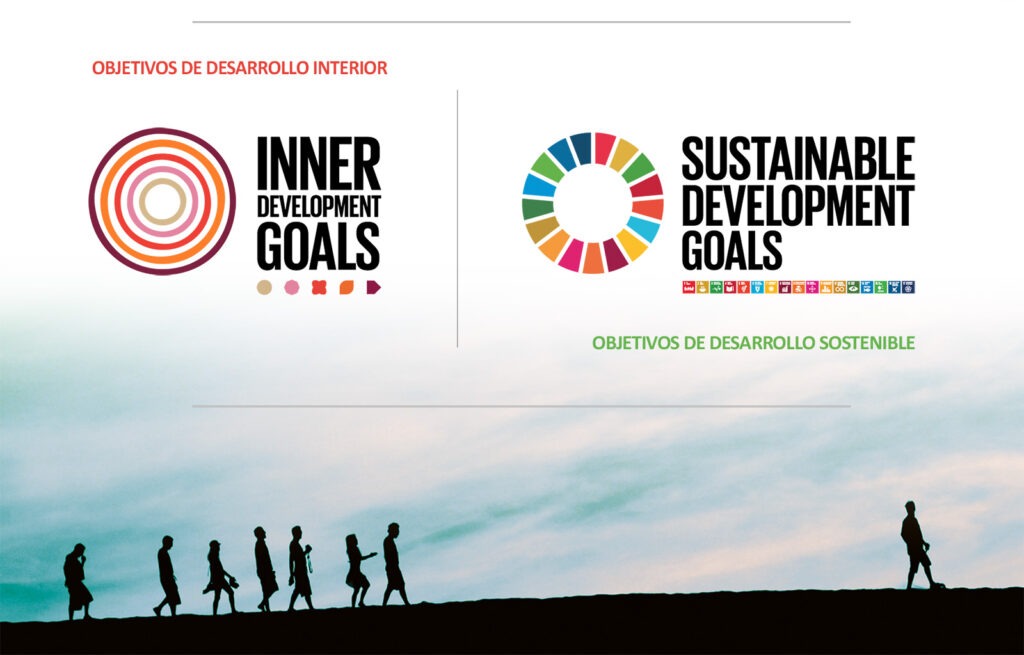
Beyond being a list of international commitments, the SDGs have become a framework that is redefining the way businesses operate, innovation is promoted and more balanced societies are built. However, their real impact will depend on the ability to turn these goals into concrete action and promote new forms of leadership and commitment. This is an area in which the Inner Development Goals (IDGs) can and should play a key role in the future.
Origins and Definition of the Sustainable Development Goals
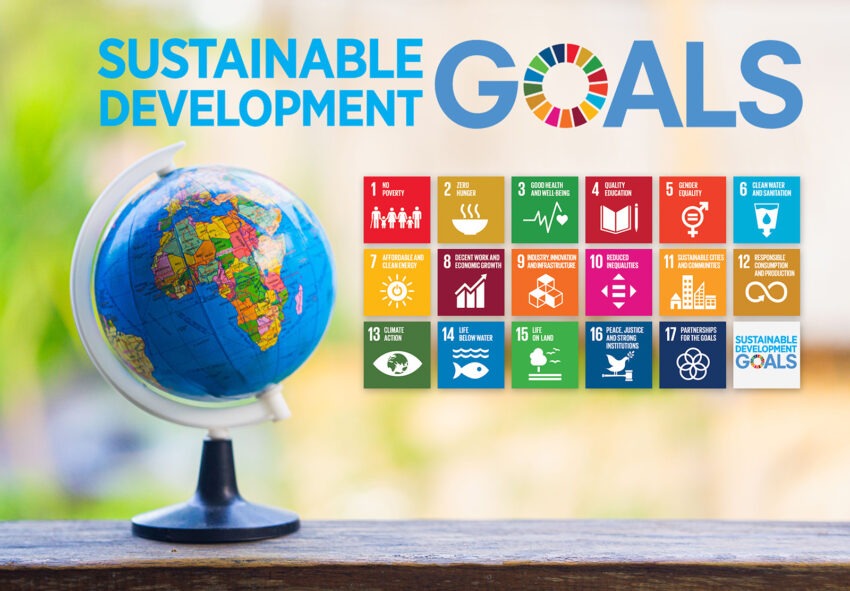
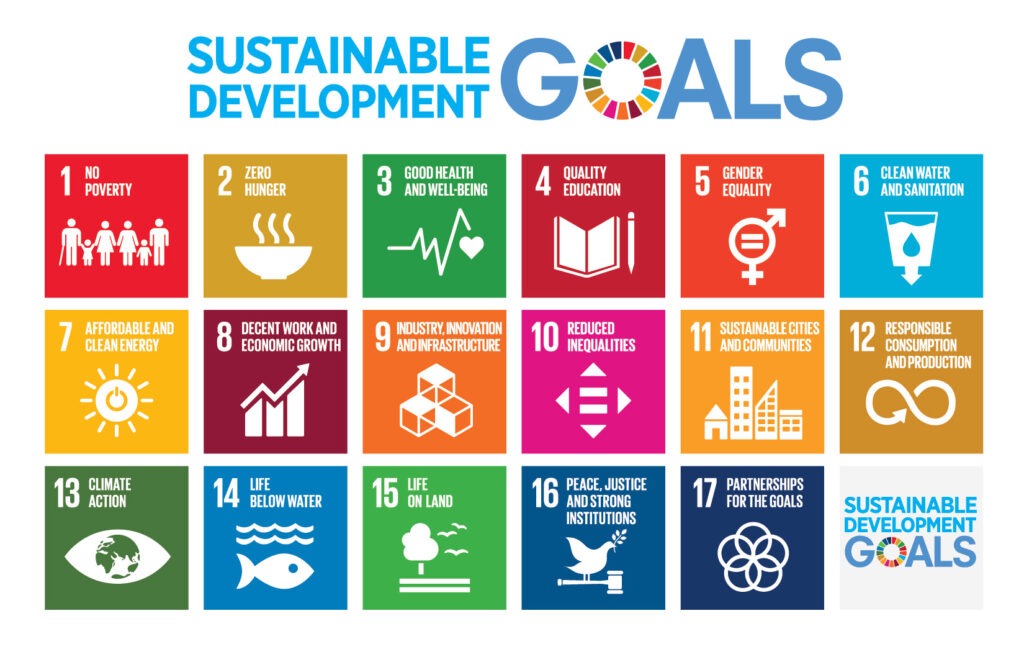
The SDGs are a set of 17 global goals adopted in 2015 by all United Nations (UN) Member States as part of the 2030 Agenda for Sustainable Development. They constitute an international roadmap aimed at eradicating poverty, protecting the environment, reducing inequalities and promoting sustainable economic, social and environmental development by 2030.
The SDGs are the direct successors to the Millennium Development Goals (MDGs), a programme consisting of eight goals that was in place between 2000 and 2015. Although the MDGs achieved significant progress in areas such as reducing extreme poverty, expanding access to primary education and lowering child mortality, they were considered insufficient to address emerging global challenges such as climate change, growing inequalities, unsustainable consumption and the need to strengthen democratic institutions.
Thus, in 2015, the UN adopted the 2030 Agenda, expanding the scope of the goals and making them applicable to all countries, regardless of their level of development.
The 17 SDGs are interconnected and based on a fundamental principle: sustainable development can only be achieved by balancing three essential dimensions:
- Economic growth
- Social inclusion
- Environmental protection
Furthermore, the 2030 Agenda is founded on the commitment to “leave no one behind”, ensuring that progress benefits everyone, particularly the most vulnerable groups. To facilitate their understanding, organisations committed to Human and Sustainable Development, such as NegoBide and Círculo Empresarial Negocios y Valores, group the SDGs into five broad areas of action.
The Five “Ps” of Sustainable Development
- People: encompasses the goals aimed at ensuring a dignified life for all people, eradicating poverty and hunger, improving health, ensuring quality education and promoting gender equality.
- Planet: brings together initiatives aimed at protecting natural resources, combating climate change, promoting responsible consumption and production, and preserving terrestrial and marine ecosystems.
- Prosperity: seeks to promote sustainable and inclusive economic growth through innovation, decent employment, resilient infrastructure and the reduction of inequalities.
- Peace: promotes peaceful, just and inclusive societies, access to justice for all and effective, transparent and accountable institutions.
- Partnership: recognises that no country can achieve the SDGs on its own and encourages international cooperation among governments, businesses, international organisations, civil society and citizens to mobilise resources, share knowledge and coordinate efforts.
Practical Value for Businesses and SMEs
Beyond their political and symbolic dimension, the SDGs have practical value, as they have become a reference framework for decision-making across multiple areas. Governments use them to design public policies, establish budgetary priorities and assess the impact of their programmes through measurable indicators.
Likewise, international organisations such as development banks and cooperation agencies use the SDGs to determine which projects are more likely to receive funding, favouring initiatives that demonstrably contribute to sustainable development.
By establishing a common language and a set of indicators shared by most countries, the SDGs also facilitate the comparison of results, the exchange of good practices and international cooperation. This makes it possible to identify areas where greater progress has been made or where delays persist, and to direct resources towards those requiring priority action.
- The Business Dimension
In the business sphere, the SDGs have ceased to be merely an ethical or corporate social responsibility initiative and have become a strategic element that directly influences organisational management and competitiveness. An increasing number of companies are incorporating the SDGs into their business plans to identify risks, create new market opportunities and respond to the growing expectations of consumers, investors and regulators.
Adopting the SDGs enables companies to orient their activities towards a sustainable growth model. This may involve reducing the environmental impact of production processes through efficient resource use, lowering greenhouse gas emissions or implementing circular economy models. At the same time, many companies are developing policies to ensure decent working conditions, promote equal opportunities, foster diversity and support continuous employee training.
From an economic perspective, integrating the SDGs can also generate competitive advantages. Companies that demonstrate a genuine commitment to sustainability can strengthen their corporate reputation, increase the trust of customers and suppliers, and improve their ability to attract and retain talent. In addition, many investment funds, banks and financial institutions incorporate Environmental, Social and Governance (ESG) criteria into their financing decisions. Companies aligned with these principles may therefore find it easier to access capital and investment.
The SDGs also encourage business innovation. The need to respond to global challenges such as climate change, the energy transition and responsible consumption encourages the development of new products, services and more sustainable business models. This not only allows companies to adapt to a changing economic environment, but also enables them to access new markets and meet growing demand for responsible goods and services.
Finally, the SDGs have transformed the way companies assess and communicate their performance. Many organisations now produce sustainability reports showing how their activities contribute to different goals through specific and measurable indicators. These reports increase transparency while allowing investors, public administrations and consumers to assess a company’s real impact beyond its financial performance.
- Advantages and Benefits for SMEs
For small and medium-sized enterprises (SMEs), the SDGs represent an opportunity to improve competitiveness and strengthen their position in the market. Although SMEs generally have fewer financial and human resources than large companies, incorporating practices aligned with the SDGs can generate both economic and social benefits.
One of the main advantages is increased operational efficiency. Measures such as reducing energy consumption, optimising raw material use, minimising waste and digitising processes can reduce costs and improve productivity.
The SDGs can also facilitate access to new business opportunities. Increasingly, public administrations and large companies require their suppliers to meet certain sustainability criteria. SMEs that integrate these principles may therefore have greater opportunities to participate in public procurement processes, join international supply chains or establish commercial agreements with larger companies.
Similarly, many public grants, subsidies and financing programmes positively assess projects that contribute to the Sustainable Development Goals. This can help SMEs access financial resources to promote innovation, digitalisation, energy efficiency or circular economy initiatives.
Finally, adopting the SDGs can strengthen a company’s image and reputation. A significant proportion of citizens increasingly favour companies, products and services committed to environmental and social responsibility. This can contribute to more responsible consumption, greater customer loyalty and a potential competitive advantage over other companies in the same sector.
SDG 18 on linguistic and cultural diversity is a proposal promoted primarily by the UNESCO Chair in World Linguistic Heritage at the University of the Basque Country (UPV/EHU) to add an additional goal to the 17 official Sustainable Development Goals of the 2030 Agenda. Its main objective is to ensure the recognition, protection and use of all languages and cultures, particularly minority languages, as an essential part of sustainable development.
Examples of SDG-Related Initiatives
An organisation:
Local 2030 Coalition Secretariat, Basque Country
Established in 1991, this non-profit association seeks to act as a bridge between the local and international spheres, promoting social transformation towards a fairer, more peaceful and sustainable model.
PURPOSE: To promote the values of Human Rights, Peace and Sustainable Development in the Basque Country and serve citizens as a reference centre for UNESCO and United Nations programmes.
- Connecting global and local networks: Bringing together the United Nations, governments at all levels, the private sector and civil society to share practical solutions.
- Accelerating territorial action: Helping local actors translate global policies into real sustainable development strategies adapted to their territories.
- Promoting shared innovation: Encouraging collaborative models and partnerships that can serve as international references for addressing common challenges within communities.
An association:
UN Etxea
Established in 1991, this non-profit association seeks to act as a bridge between the local and international spheres, promoting social transformation towards a fairer, more peaceful and sustainable model.
PURPOSE: To promote Human Rights, Peace and Sustainable Development in the Basque Country and serve citizens as a reference centre for UNESCO and United Nations programmes.
- Human Rights and Peace: Promoting approaches and attitudes that enable Basque citizens and institutions to integrate a culture of peace and human dignity as social foundations.
- Promoting the 2030 Agenda: Actively supporting awareness and implementation of the SDGs, with a commitment to “leave no one behind”.
- Transformative Education: Working with the UNESCO Associated Schools Network and raising awareness among young people about sustainability, equality and interculturalism.
- Promoting Culture and Science: Valuing diverse cultural expressions and environmental protection while placing human development at the centre of policy.
A transformative organisation:
SANNAS
SANNAS is a business network seeking to transform the traditional economic model by promoting companies that measure their success not solely through financial profit, but also through their social and ecological impact.
PURPOSE: To transform the traditional business model through the Triple Balance, promoting ecological sustainability, social equity and economic profitability.
- Economic: Creating prosperous and profitable businesses whose activities generate a genuine positive impact.
- Ecological: Regenerating the planet by moving from a linear economy towards a circular approach adapted to environmental limits.
- Social: Promoting a fair and inclusive society in which people’s well-being is valued alongside financial performance.
An initiative:
Auzolanaren Negobidean (NegoBide & Círculo Empresarial Negocios y Valores)
In traditional rural Basque communities, Auzolana referred, and still refers, to neighbourhood cooperation or shared work carried out for the common good. NegoBide refers to the “Business Path”. Auzolanaren Negobidean is an initiative providing training, advice and support to professionals and small businesses in developing their Social Responsibility and Sustainability.
Carbon Footprint: First company in its sector to obtain the Spanish Ministry for the Ecological Transition’s double “Calculate + Reduce” certification.
- Human and Sustainable Development: Connecting economic growth with common-good values, business ethics and profitability.
- Human development: connects economic growth with common good values, business ethics, and profitability.
- Measurement and Improvement: Using focus groups, Cooperation Meetings and systems for identifying and making balanced indicators visible.
A tool:
EKOPULSE
Trust for Sustainability: A digital platform connecting people, organisations, products, services and places in order to measure, demonstrate and make visible their contribution to sustainability.
PURPOSE: “We democratise the recognition of sustainability, enabling any initiative to turn its actions and evidence into understandable and verifiable impact.”
- Sustainability profiles for businesses, retailers, public administrations, citizens and projects.
- Assessment through an impact score and a reliability rating for the evidence provided.
- Integration of documents, photographs, certifications, objectives, improvements and recognitions.
- Support for programmes, communities and territories in identifying progress and creating new opportunities for collaboration.
A company:
EGA Master
EGA Master is an industrial SME specialising in high-quality tools for sectors such as energy, mining and aerospace. The company has integrated the Sustainable Development Goals through three main areas: decarbonisation, circular economy in product packaging and the use of 100% renewable energy.
- Carbon Footprint: First company in its sector to obtain the Spanish Ministry for the Ecological Transition’s double “Calculate + Reduce” certification.
- Sustainable Packaging (SDG 12): Finalist on the go!ODS awards for a circular economy-based packaging model that reduces its carbon footprint.
- Clean Energy (SDG 7): Commitment to consuming 100% renewable energy in order to reduce greenhouse gas emissions.
A winery:
Baigorri
Baigorri is an innovative winery located in Samaniego, in the heart of Rioja Alavesa (DOCa Rioja). It is distinguished by its iconic glass-box building at ground level, which extends seven floors underground, allowing its wines to be produced using gravity in order to preserve the integrity of the grapes as much as possible.
PURPOSE: To give wine its fullest expression through absolute respect for the grape, combining traditional gravity-based production with sustainable innovation to generate a positive impact on society and the environment.
- Facilities designed to harness gravity, reducing energy consumption.
- Efficient water management and reuse of wine by-products.
- Reduction of environmental impact through more sustainable production processes.
- Integration and preservation of the vineyard landscape and soils. A reference among companies with B Corp certification, demonstrating a commitment to ethical practices, transparency and responsible environmental management.
A social enterprise:
Katealegaia
Katealegaia is a non-profit organisation providing comprehensive production, assembly and quality-control services for components using different technologies for industry, primarily employing people with disabilities.
PURPOSE: To create and maintain quality employment for people with disabilities and those at risk of social exclusion. The organisation combines its social mission with the provision of competitive industrial services and solutions for businesses.
- Inclusion: Stable and decent employment adapted to each person’s abilities.
- Reducing inequalities: Facilitating access to the labour market.
- Collaboration with businesses and public administrations: Acting as a trusted partner.
…
Inner Development Goals: Complement and Perspective
One of the main criticisms of the SDGs is that, although they establish ambitious global goals, they do not always sufficiently address the internal dimension of human development. The SDGs primarily focus on transforming the external structures of society, such as the economy, institutions, the environment and inequality, yet their implementation depends largely on the capabilities, values and behaviours of the people and organisations responsible for putting them into practice.
In this context, the Inner Development Goals (IDGs) have emerged as a potentially important complementary tool for the long term. The IDGs are based on the idea that sustainable transformation requires not only changing external systems, but also developing the internal capabilities of individuals, leaders and organisations. At NegoBide, this idea is described as “working on your own square metre”: starting with what each person and organisation can influence directly. The objective is to foster competencies and skills related to empathy, collaboration, responsibility, critical thinking, adaptability and ethical awareness.
The IDGs seek to address one of the main limitations of the SDGs: the gap between political commitment and practical implementation. Many governments, businesses and organisations may recognise the importance of sustainability while lacking the cultural, emotional or leadership tools required to implement profound change. From this perspective, the IDGs can provide a human foundation for advancing the SDGs.
In the long term, integrating the IDGs could help overcome some of the current limitations of the SDGs. While the SDGs provide an external direction through concrete goals and indicators, the IDGs focus on developing the internal capabilities needed to achieve those goals. In other words, the SDGs address the question of «what changes does the world need?», while the IDGs address «what kind of people and organisations do we need to make those changes happen?»
However, the IDGs also present challenges. Because they focus on internal aspects such as values, awareness and leadership, measuring their impact is more complex than measuring traditional SDG indicators. There is a risk that they may become overly abstract concepts if they are not translated into concrete practices within institutions, businesses and education systems.
Therefore, the IDGs should not be understood as a replacement for the SDGs, but rather as a complementary and parallel long-term approach. Combining both perspectives would allow sustainable development to be addressed more comprehensively: «While the SDGs provide a roadmap for transforming the world around us, the IDGs highlight the need to develop the internal capabilities of those who must lead, drive and support that transformation.»